You’ve got a product, a pitch deck, maybe a Canva logo you whipped up at midnight. But something still feels off your startup doesn’t quite look like a real company. This is exactly where a graphic designer steps in. And they do far more than “make things pretty.”
Most founders underestimate the role of a graphic designer until a big client ghosts them after seeing their website, or a pitch lands flat because the slides looked like a college project. The truth is, design isn’t a finishing touch it’s infrastructure. It shapes how people perceive your startup before you ever say a word.
Let’s break down exactly what a graphic designer does for a startup and why getting this right early on can be one of the smartest investments you make.
They Build the Visual Identity Not Just the Logo
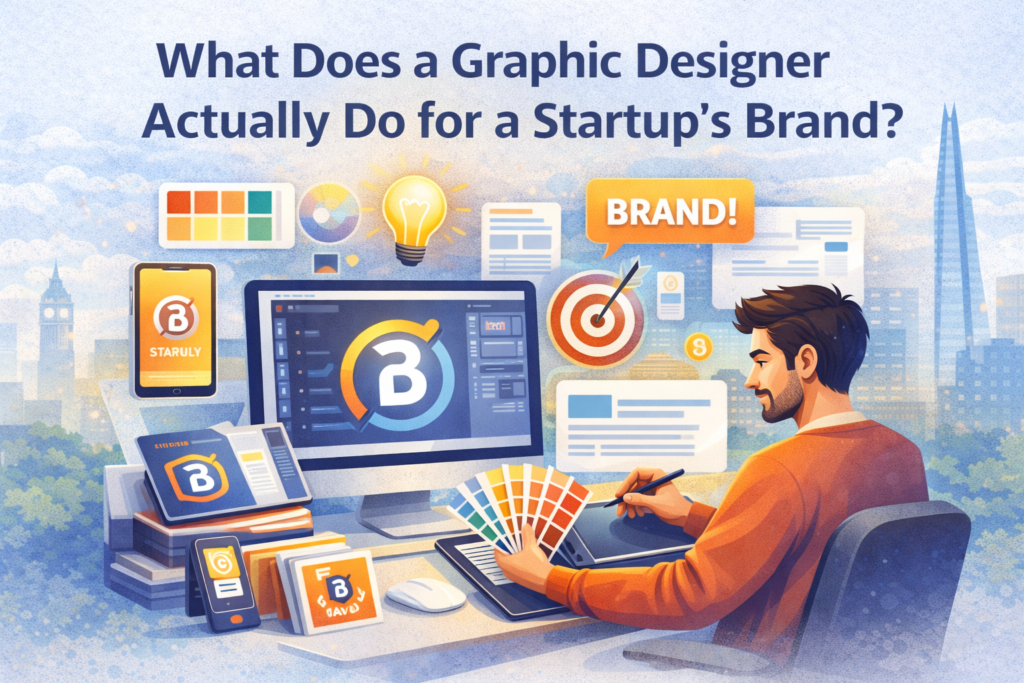
Here’s a common misconception: hiring a graphic designer means getting a logo. In reality, a logo is just one piece of something far larger your visual identity system. A skilled designer creates the entire visual language your brand speaks.
This includes:
- Logo suite primary, secondary, and icon versions for different contexts
- Colour palette strategic choices that evoke the right emotion and stand out in your market
- Typography hierarchy which fonts carry your headlines, body text, and calls to action
- Imagery direction what photos, illustrations, or icons feel “you”
- Brand guidelines a document that ensures consistency whether you’re posting on Instagram or presenting to investors
Without a coherent system, your startup looks fragmented. Different fonts on your website, a clashing colour scheme in your pitch, and an inconsistent tone across social media all erode trust even when your product is excellent.
RemoteDev Insight
At RemoteDev.uk, our graphic design team builds full brand identity systems alongside digital products so your app, website, and marketing materials all feel like they belong to the same world. It’s one of the biggest things that separates startups that attract investment from those that don’t.
They Translate Your Values Into Something Visible
Your startup has a story. You know why you started it, what problem you’re solving, and who you’re building for. A graphic designer’s job is to translate all of that into something a stranger can feel within three seconds of landing on your homepage.
Think about how Monzo made banking feel approachable with coral cards and clean interfaces, or how Notion feels calm and thoughtful with its minimalist layout. Neither of those was accidental. Both were the result of designers who deeply understood the brand’s values and turned them into visual decisions.
A great graphic designer will ask questions that might surprise you: Who are your competitors, and how do they look? What adjectives would you use if your brand were a person? Where does your audience spend time online? These aren’t fluffy questions the answers directly inform every design decision that follows.
They Make Your Startup Look Credible Before You’ve Earned It
Trust is the currency of early-stage startups. You don’t have years of case studies or a famous name behind you. What you do have is how you present yourself and design is your fastest path to credibility.
When a potential customer lands on a polished, well-designed website, something subtle happens in their brain: they associate good design with attention to detail, reliability, and professionalism. Conversely, a misaligned font, a blurry logo, or inconsistent spacing signals carelessness and that feeling transfers directly to your product.
For startups pitching to investors or enterprise clients, this matters even more. A beautifully designed pitch deck doesn’t just look nice it signals that you take your business seriously.
They Design for Every Touchpoint Not Just One
A graphic designer at a startup isn’t just sitting in the corner making flyers. They’re working across every surface your brand touches. Here’s what that actually looks like day-to-day
Digital Touchpoints
- UI/UX design for websites and web apps (layouts, buttons, icons, micro-interactions)
- App screens and onboarding flows
- Social media templates for LinkedIn, Instagram, and X
- Email newsletter layouts and header graphics
- Digital ads and banners in the right dimensions for every platform
Presentation & Sales Assets
- Pitch decks and investor presentations
- Sales one-pagers and case study templates
- Proposal documents that reflect your brand identity
- Demo videos and explainer thumbnails
Physical & Miscellaneous
- Business cards and branded stationery
- Event banners, booth materials, and merchandise
- Packaging design (if you ship a physical product)
- Internal slide decks and onboarding documents that reinforce your brand to new hires
The goal isn’t volume it’s coherence. Every piece should feel like it came from the same brand, building a cumulative impression over time.
They Solve Problems Visually, Not Just Aesthetically
Here’s what separates a graphic designer from someone who’s “good with Canva”: professional designers approach design as problem-solving, not decoration.
Say your product is complex to explain. A designer will think through how to communicate the value proposition in five seconds flat perhaps through a simple illustration, a side-by-side comparison, or an infographic that collapses what would take three paragraphs of copy into a single glanceable image.
Say your signup page has a high drop-off rate. A designer will look at the visual hierarchy where does the eye go first? Is the call to action buried? Are there too many competing elements pulling attention away from the one action you need users to take?
Real Example
One of our clients at RemoteDev.uk was struggling to convert visitors on their MVP landing page despite good traffic. We redesigned the hero section adjusting the headline size, repositioning the CTA button above the fold, and replacing a stock photo with a custom product screenshot. Conversion rate increased by over 40% within two weeks. The copy barely changed. The design did all the work.
They Work Closely With Developers and Marketers
The best graphic designers at startups don’t work in isolation. They sit at the intersection of development, marketing, and strategy and their output directly enables everyone else’s work.
When your designer hands off files to your developer, they’re not just sending a pretty image. They’re providing:
- Component-level design specs (margins, padding, colours in hex, font sizes in rem)
- Responsive design breakpoints for mobile, tablet, and desktop
- Exported SVG icons and image assets at the right resolutions
- Design system documentation that keeps the codebase consistent
This is precisely why at RemoteDev.uk, our graphic designers and developers work as an integrated team. When both disciplines share context from day one, the result is a product that’s not just visually strong it’s technically sound and faster to ship.
They Evolve Your Brand as You Grow
Your brand at pre-seed isn’t the same brand you’ll need at Series A. The market evolves. Your product matures. Your audience shifts. A graphic designer helps you grow intentionally refining rather than reinventing, so that your brand builds equity over time instead of starting from scratch every year.
This might look like:
- A logo refresh that modernises without losing recognition
- An expanded colour palette as your product categories grow
- A more refined typography system as you move upmarket
- New sub-brand guidelines for a spin-off product or enterprise tier
The startups that get this right think Airbnb’s gradual design evolution from scrappy to iconic, or Notion’s journey from text-heavy to quietly elegant do so because they treat design as an ongoing investment, not a one-time cost.
So Do You Actually Need a Graphic Designer?
If you’re a founder in the very earliest days, juggling everything with zero budget, tools like Canva or Figma can get you started. But there’s a tipping point and most startups hit it sooner than they expect.
You need a graphic designer when:
- You’re approaching your first serious investor meetings
- You’re launching publicly and need to make a strong first impression
- Your brand feels inconsistent across different platforms
- You’re entering a market where design is part of the product experience
- You’re hiring because your brand is now a recruiting tool
The good news? You don’t necessarily need to hire a full-time designer from day one. Many UK startups work with specialist agencies or remote design teams to get professional-grade output without the overhead of a full-time salary.
Final Thoughts
A graphic designer isn’t a luxury they’re a strategic asset. They shape the first impression every investor, customer, and potential hire has of your company. They build the visual infrastructure your product, marketing, and sales teams depend on. And they solve communication problems in ways that words alone simply cannot.
In a crowded market, where attention is scarce and trust is hard-won, great design isn’t optional. It’s how the best startups announce that they’re the real deal before they’ve said a single word.
If your brand still doesn’t look like the company you know you’re building, it might be time to bring in someone who specialises in making the invisible visible.